source: http://www.gardendesign.com/pictures/string-gardens_418/#7695
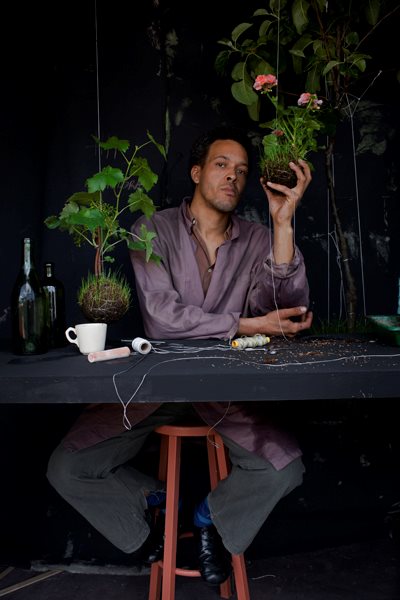
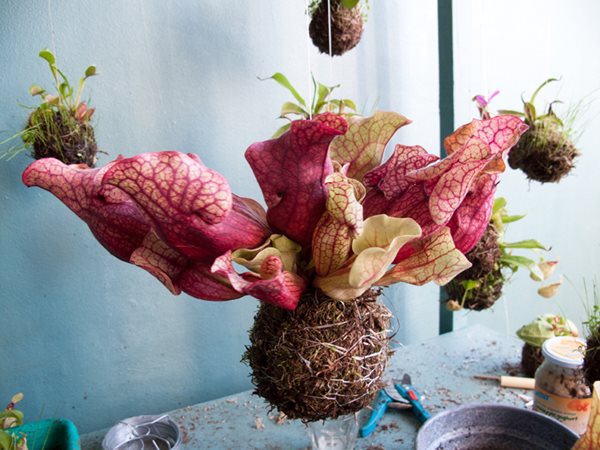
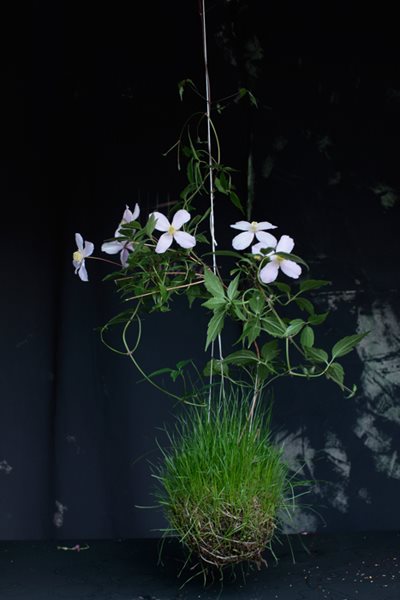
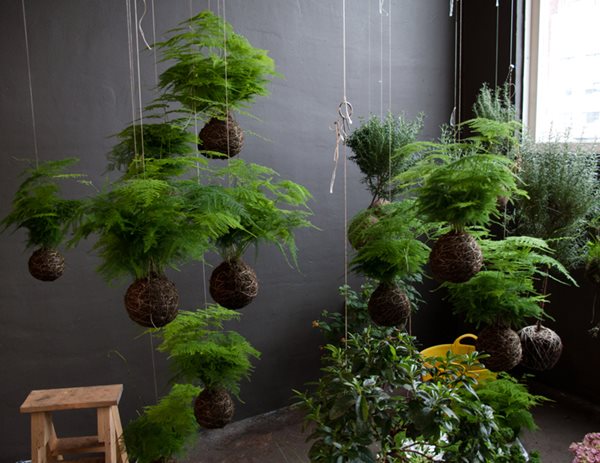
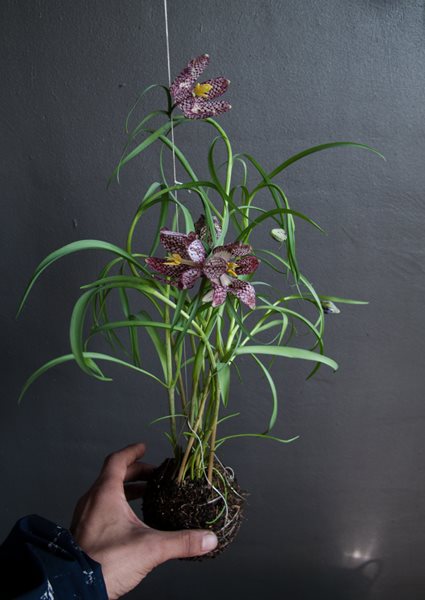
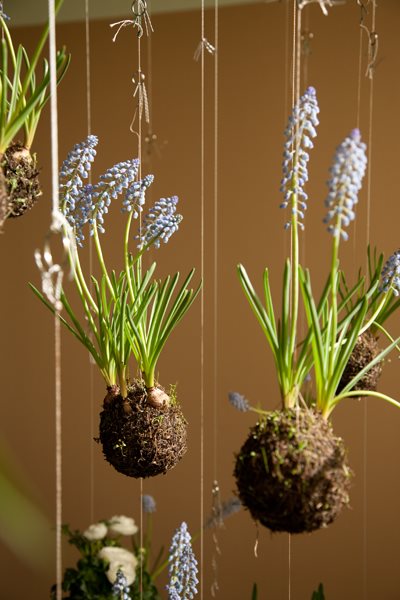
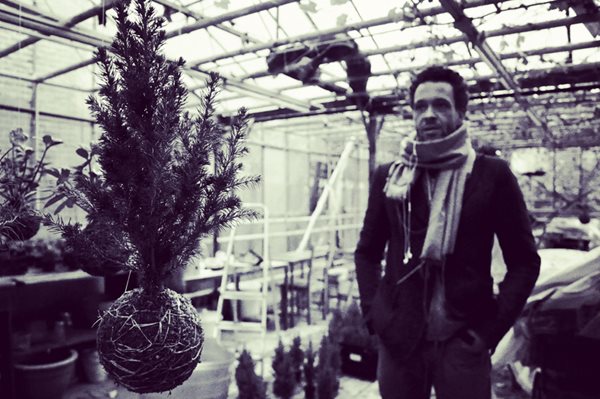
Images of Dutch artist Fedor Van der Valk's string gardens, featuring plants in bloom from throughout the year.


 Plants are remarkably versatile, and you can rest assured that there
are plenty of species ideal for your space. Just like observing a garden
to ensure that you’ll plant the right varieties that’ll thrive in the
light, shadow, and humidity there, observe the room in which you’re
planning to keep your terrarium(s) so you can determine which plants to
use. When it comes to choosing a container, the sky really is the limit:
I’ve used brandy snifters, mason jars, aquariums, and even glass teacups for mine, and a quick trip to the thrift store can provide you with several great containers for this project.
Plants are remarkably versatile, and you can rest assured that there
are plenty of species ideal for your space. Just like observing a garden
to ensure that you’ll plant the right varieties that’ll thrive in the
light, shadow, and humidity there, observe the room in which you’re
planning to keep your terrarium(s) so you can determine which plants to
use. When it comes to choosing a container, the sky really is the limit:
I’ve used brandy snifters, mason jars, aquariums, and even glass teacups for mine, and a quick trip to the thrift store can provide you with several great containers for this project.


The Nature of Japanese Garden Art
NIWA
- "pure place" is the word for the
Japanese Garden.
It has
its echo in Eden which in the western cosmology
was a garden of purity before sin entered into
the world. Since sin never entered the NIWA,
it is still the pure and beautiful place it
always has been.
The principles
of Zen philosophy help us to bring to a personal
experience of the Japanese Garden understandings,
leading to a deeper comprehension of its meanings.
In other words, the more we can bring to the experience,
the greater will be the return to the observer.
|
||||||||||||||
Zen
Principles which relate to the Niwa
A
Japanese Garden is a representation of the universe
and its elements: Fire in the form of a
stone or iron lantern, Earth in the form
of stone, and water, air, plant,
and animal life in their true forms.
Gardens
essentially divide between the dry landscape and
the pond garden types. Even in a dry garden there
is always some water, notably in dripping basins
or suggested by waterfall chains from the down
spouts.
The garden path, or roji, is not merely a functional entry into the garden. It is a philosophical path separating the viewer step-by-step from the work-a-day world which he leaves behind. Its stones are placed with careful irregularity and lead indirectly rather than directly to often hidden or obscure places. Bends in the path, or larger stones, are stopping points for vistas or views, representing meditative pauses in the personal experience of contacting the universe via the garden experience. Stones generally form the basic supporting framework of a Japanese garden,and they should look as though they had always lived in the spot in which one sees them. Jagged stones are used to suggest mountain areas and water-worn pebbles are used in stream courses and along shorelines. These landscape effects are often more symbolic than realistic. For example, there is generally an island in either a stream or pond which suggests the island of everlasting life, or Nirvana - a place without time or space of ultimate retirement in peace and tranquillity. Its symbols may be a stone representing a turtle, or a tree form representing a crane - symbols of longevity and the good life - and such additional happiness symbols as the shochikubai or three friends of the new year consisting of pine, bamboo and plum. Some of these symbols are entirely abstract in their form. A Japanese Garden is not planted with the idea of presenting a display of flowers. The Japanese often enjoy their gardens most in the austere conditions of winter when the trees are bare and the foliage is at a minimum. They often trim camellias, azaleas, and other flowering shrubs so as to produce a minimum of flowers. Flowers are never used in beds or borders. In fact, a severe discipline governs the use of flowers which are used at only one point in the house, the tokonoma, a special architectural alcove built for the purpose. Fresh flowers or plant materials are never used decoratively on the dining table or at odd points about the house; never worn as corsages; never used at weddings or funerals. Essentially as a matter of philosophy, flowers and plants are considered to have a very special life of their own as an expression of nature and are never used as decorations. The principles which govern these aspects of the garden come from the philosophy of Zen and they can mean not only one thing alone, but may have correlative meanings at the same time. No one principle therefore necessarily contains the whole meaning on its own. |
||||||||||||||
The
Zen Principles which relate to the Niwa
are presented in the following pages:
The fundamental and related
concepts of
Shibui, Wabi and Sabi are discussed on these pages: |
||||||||||||||
 |
||||||||||||||
 |
||||||||||||||
About Professor
Lennox Tierney
UCLA - Bachelors Degree
Columbia, NY - Masters Sogetsu Ryu, Tokyo, Japan - Doctorate Technical Work: Art Center School, Pasadena Former President of Schaeffer School of Design, San Francisco Professor Emeritus of the History of Asian Arts, University of Utah Former Curator of Asian Arts for San Diego Museum of Arts Current Curator of the Art of Japan for Utah State Museum of Fine Arts Art Director - Japanese Friendship Garden, San Diego Consultant / Donor, Mingei Museum, San Diego |
 I first learned of wabi-sabi while studying traditional Japanese Tea Ceremony ("sado") fifteen years ago in the Shimokita Hanto of Aomori,
a rural part of northern Japan. A perfect place to experience
traditional Japanese values and concepts. While studying Japanese Tea
Ceremony, I began to appreciate the aesthetic simplicity of the ritual,
an art that is an expression of fundamental Zen principles such as
purity, tranquility, and a respect for nature and a desire to live in
harmony with it.
I first learned of wabi-sabi while studying traditional Japanese Tea Ceremony ("sado") fifteen years ago in the Shimokita Hanto of Aomori,
a rural part of northern Japan. A perfect place to experience
traditional Japanese values and concepts. While studying Japanese Tea
Ceremony, I began to appreciate the aesthetic simplicity of the ritual,
an art that is an expression of fundamental Zen principles such as
purity, tranquility, and a respect for nature and a desire to live in
harmony with it.
 Work,
if we're lucky, is a creative endeavor. Our presentations — high-tech
or not — require our creativity in planning, designing, and delivering.
Can ancient wabi-sabi principles apply to such a common task as a business or academic presentation?
Work,
if we're lucky, is a creative endeavor. Our presentations — high-tech
or not — require our creativity in planning, designing, and delivering.
Can ancient wabi-sabi principles apply to such a common task as a business or academic presentation? "The influence of wabi sabi on creativity begins with a simple premise: Do only what is necessary to convey what is essential. In bonsai and in haiku, you prune and trim what is nonessential in an attempt to shorten the distance between the observer and the observed. You carefully eliminate elements that distract from the essential whole, elements that obstruct and obscure....Clutter, bulk, and erudition confuse perception and stifle comprehension, whereas simplicity allows clear and direct attention."Not all wabi-sabi-inspired principles will have an obvious application to presentation design. But take a look at this chart from pages 10-11 of Powell's book. Here the author is contrasting wabi-sabi ideals with that which is "slick and stylish, plastic, and faux." What Powell calls "Tech Slick." Technology usage is important the author says, but a balance is necessary.
Wabi Sabi
|
"Tech Slick"
|
|
| Nature focused Authentic Allows things to age Subtleties Intuitive Personal One-of-a-kind In the moment The whole Open and unresolved Appreciation Seasonal Flexibility Tolerates ambiguity Paradoxical Unrefined Elegant Fractal Organic Living Handcrafted Soft edges Patina Stone Listens Sees Receptive Slow Humble Plain Reflective Mindful Heartfelt Warm |
Technology focused Copied Strives for eternal youth Bold and obvious Rational Impersonal Conformity and sameness Future oriented Separated into parts Works toward closure Depreciation Quarterly Stability Intolerance of ambiguity Black and white Refined Ornate Square and measured Geometric Artifact Mass-produced Hard edges Plastic Steel Talks Shows Arrogant Fast Proud Fancy Unconscious Mindless Heartless Cold |
 Exposing ourselves to traditional Japanese aesthetic ideas — notions
that may seem quite foreign to most of us — is a good exercise in lateral thinking,
a term coined by Edward de Bono in 1967. "Lateral Thinking is for
changing concepts and perception," says de Bono. Beginning to think
about design by exploring the tenets of the Zen aesthetic may not be an
example of Lateral Thinking in the strict sense, but doing so is a good
exercise in stretching ourselves and really beginning to think
differently about visuals and design in our everyday professional lives.
The principles of Zen aesthetics found in the art of the traditional
Japanese garden, for example, have many lessons for us, though they are
unknown to most people. The principles are interconnected and overlap;
it's not possible to simply put the ideas in separate boxes. Thankfully,
Patrick Lennox Tierney (a recipient of the Order of the Rising Sun in
2007) has a few short essays elaborating on the concepts. Below are just
seven design-related principles (there are more) that govern the
aesthetics of the Japanese garden and other art forms in Japan. Perhaps
they will stimulate your creativity or get you thinking in a new way
about your own design-related challenges.
Exposing ourselves to traditional Japanese aesthetic ideas — notions
that may seem quite foreign to most of us — is a good exercise in lateral thinking,
a term coined by Edward de Bono in 1967. "Lateral Thinking is for
changing concepts and perception," says de Bono. Beginning to think
about design by exploring the tenets of the Zen aesthetic may not be an
example of Lateral Thinking in the strict sense, but doing so is a good
exercise in stretching ourselves and really beginning to think
differently about visuals and design in our everyday professional lives.
The principles of Zen aesthetics found in the art of the traditional
Japanese garden, for example, have many lessons for us, though they are
unknown to most people. The principles are interconnected and overlap;
it's not possible to simply put the ideas in separate boxes. Thankfully,
Patrick Lennox Tierney (a recipient of the Order of the Rising Sun in
2007) has a few short essays elaborating on the concepts. Below are just
seven design-related principles (there are more) that govern the
aesthetics of the Japanese garden and other art forms in Japan. Perhaps
they will stimulate your creativity or get you thinking in a new way
about your own design-related challenges. Fukinsei (不均整)
Asymmetry or irregularity. The idea of controlling balance in a
composition via irregularity and asymmetry is a central tenet of the Zen
aesthetic. The enso ("Zen circle") in brush painting, for example, is
often drawn as an incomplete circle, symbolizing the imperfection that
is part of existence. In graphic design too asymmetrical balance is a
dynamic, beautiful thing. Try looking for (or creating) beauty in
balanced asymmetry. Nature itself is full of beauty and harmonious
relationships that are asymmetrical yet balanced. This is a dynamic
beauty that attracts and engages.
Fukinsei (不均整)
Asymmetry or irregularity. The idea of controlling balance in a
composition via irregularity and asymmetry is a central tenet of the Zen
aesthetic. The enso ("Zen circle") in brush painting, for example, is
often drawn as an incomplete circle, symbolizing the imperfection that
is part of existence. In graphic design too asymmetrical balance is a
dynamic, beautiful thing. Try looking for (or creating) beauty in
balanced asymmetry. Nature itself is full of beauty and harmonious
relationships that are asymmetrical yet balanced. This is a dynamic
beauty that attracts and engages.|
Cacti in Depth
Further Your Knowledge of Cacti
|
|
| If you would like to submit information to this page, please send an e-mail to daiv@CactiGuide.com. | |
How-To-NOT Build a Cactus TerrariumThe world is full of free advice. Some of it is good and some not-so-good. Building a cactus terrarium falls in to the later category. While the immediate results of a such a terrarium can be very attractive, the future of the project is doomed from the start. The purpose of this article is to detail some of the specific problems that must be addressed for the welfare of the plants. Of course, if the problems are dealt with properly, the project will no longer qualify as a terrarium. 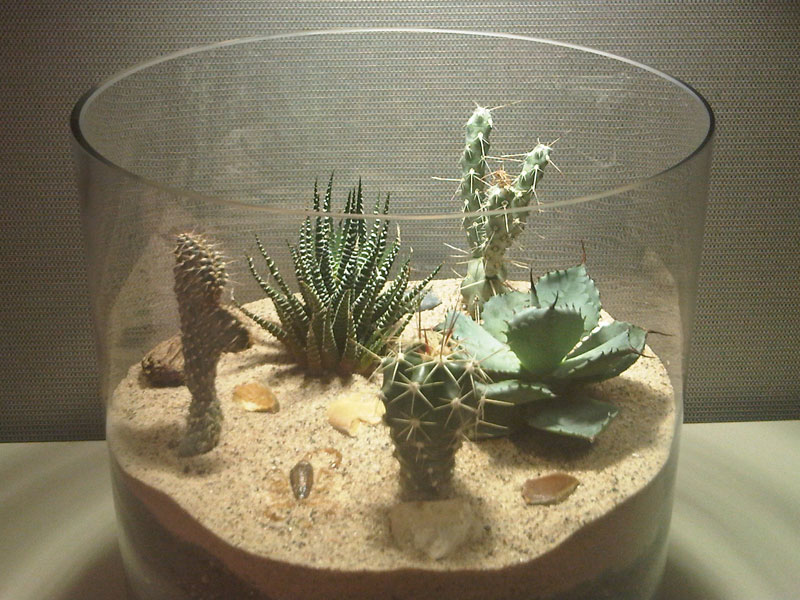 Initially, a Cactus and Succulent Terrarium is Very Attractive! Photo: David Gonzales Before we get into all the reasons NOT to make a cactus terrarium, lets first explore why they are being made in the first place. To start, a terrarium is intended to be something like a mini-ecosystem in a glass box. We like them because they enable us to see living things in a more natural or sometimes even in a fantasy setting - all from the comforts of our living room or office. Those of us who love desert ecosystems are easily enticed by the thought of having a mini version of some sand-covered landscape, punctuated by spiny, water-storing plants and accented with reptiles or large invertebrates like scorpions! (see image above) As with real deserts, there is a beauty within the harshness that fascinates and interests us. Some people my hit the web and search out instructions for making their own desert terrarium, while others may happen across it while watching their favorite home decorating show. In fact, this article was prompted by a recent Martha Stewart presentation on creating a succulent terrarium. While I didn't see this show, I learned about it after receiving several e-mails from viewers who did see this show and still had some questions. Knowing that this would be an on-going topic, I decided to put this article together in response to these other sources and hopefully prevent some people from going through a lot of trouble for nothing. We'll soon get into specifics, but I have one last introductory point or what could actually be considered a disclaimer. If you only have a temporary use planned for your desert terrarium - such as a wedding centerpiece or simply entertaining guests for a week, this article doesn't apply. Many cactus and other succulent plants would look fine after being left in a cardboard box for a whole month in the back of some dark closet. This is because these plants will often wait out poor conditions and either grow very slowly or not at all with no ill effects. This sets them apart from other plants, yet even though they can survive this way, a bad environment will eventually win and the plants will die. The counter-advice that I am giving here is aimed at people who want their cactus plants to grow, flourish, and even flower - not simply survive for a few months and then die an early death. Finally! On to the specifics (in no particular order): Airflow: Succulent plants, especially cacti, appreciate good air circulation. They will not get this down in a glass jar even if there is no lid. Fish bowls that have a narrow opening are even worse and rectangular aquariums are no better. In addition to poor air circulation, the glass sides increase humidity which is also detrimental to most cacti. Water: There is a widespread myth that cactus and succulents don’t like having much water. In truth, they actually appreciate lots of water. As long as it is warm enough and they are getting plenty of light, they will benefit from a good soaking. In a terrarium without drain holes it is impossible to water these plants properly. This is because the plants like a good drink, but they do not like wet feet. The soil should be allowed to dry between watering and there should not be any "sitting" water at the bottom of the pot. Overwatering is one of the fastest ways to kill a cactus and as a result, people with these terrariums will suggest watering in very small amounts at a time. While a seemingly reasonable solution, the result will be unhappy plants. In habitat, these plants form extensive root systems to take in large amounts of water all at once with a dry period between rains. In the Martha Stewart example, the advice is to allow no more than 1 inch of water to sit in the bottom. In a container without drainage holes and a layer of potting soil and sand on top, it would take months for this 1 inch of water to dry up. During that time, the plants would be getting little or no water at all. Soil Layers: Most, if not all of the cactus terrarium tutorials advocate a layered soil. This, no doubt, stems from a general understanding that cacti do not like growing in a swamp. With a lack of drain holes at the bottom, any water that is put into the container stays in the container until the plant uses it or it evaporates. This is true with or without layered soil. Now water will soak up through any soil it is in contact with, but it doesn't soak up through a layer of gravel. This makes adding a layer of gravel or small rocks seem like a simple solution to the problem. In reality, this theory doesn't hold true. As mentioned above, these plants put out extensive root systems. The roots of the plants are not going to stay neatly confined in the middle layer of potting soil. They will continue growing down into the rocky layer. As a result the roots in the organic part of the mix will be too wet and the other too dry or they will both be too wet or both be too dry. You can’t have the entire root system with the right amount of water when the roots extend into layers that hold different amounts of water for different lengths of time.  A side view illustrating the soil layers. - Photo: David Gonzales Light and heat: Many cacti are sun lovers and many will grow very happily in full sun all day in Phoenix, AZ and even ask for more sun! While you might select some cacti that can be grown with less light than that, you will still need to provide a good deal of strong sunlight or artificial light. To do this, you’ve got put the container in sunlight at least part of the day and at least part of the year. However, if you do that, the high glass sides of the terrarium will act like a solar oven and it will be far too hot without enough airflow and you’ll literally cook the plants. While artificial lights may not heat the interior as much as direct sunlight, it is extremely challenging to provide enough artificial light to properly grow cactus plants. Container size: If a plant is alive, it will want to grow, meaning it will get bigger. While there are some cacti and succulents that remain relatively small, many of them get quite large. In addition to growing up and out, the root systems will quickly fill the container. For a given terrarium, either the plants will have to stay small or the container will need to be impracticably large to contain them. Seldom is a terrarium chosen large enough to house plants that are happily growing. Of course, the other cultivation issues will need to be addressed in order to have healthy growing plants. So even if all other conditions are met, the terrarium will still be only temporary before the plants need to be moved to a larger container. Plant Compatibility: With most terrariums and also with "dish gardens" plants are chosen with no consideration for potential growth. Aside from the crowding issues that accompany a container that is too small, plants also grow at different rates. Some plants may be in need of a larger container within a year while others might never outgrow the initial container size. An even bigger problem with confining multiple plants to one small container is that different plants require different amounts of light and water at different times. If you have a thirsty plant in the same container as a plant that has too much water, it is a lose-lose situation. The more plants you have in one container, the more complicated this gets. The same is true of light; not all plants want the same amount of sun and/or shade. Even with multiple plants of the same species the needs can vary plant by plant. In any case, having a bunch of the same plants in one pot doesn't make for a very interesting terrarium. In conclusion, the hardy drought-resistant nature of these plants means that they will make an attractive mini-desert terrarium that can last for several months. Never-the-less they will slowly begin to die off over the course of a year or maybe even two depending on the plants and conditions. While that may seem like a long time, most cactus will grow for many decades when properly cared for and produce some of the most outstanding flowers of any type of plant. You can see many examples of properly cultivated plants here on CactiGuide.com as well as get information on the best way to care for your plants. I recommend the Growing Page for starters. Finally, even if you may not have a quaint mini-desert in a glass box, growing cacti properly can prove to be a very rewarding horticultural hobby. Author: Daiv Freeman |


